

Fake Customer Care Call Scam: How Scammers Steal Your Money by Pretending to Help
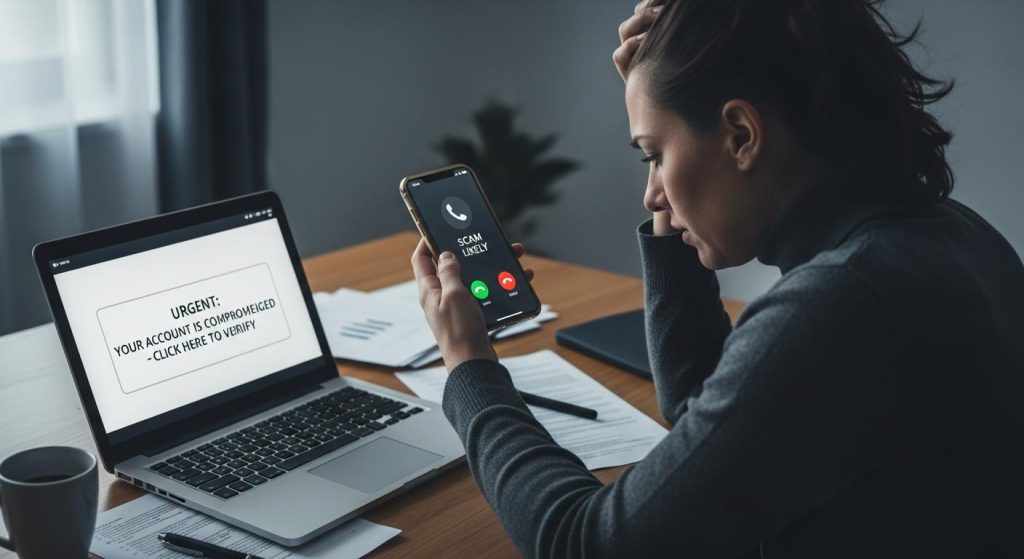
You are facing a problem with an online payment. Your money has been deducted, but the transaction is still showing as pending.
You quickly search Google for the company’s customer care number.
You find a number, call it, and explain your problem.
The person on the other side sounds professional. They understand your issue and promise to help you get your money back.
Then they ask you to share an OTP, install a screen-sharing application, or follow a few instructions on your phone.
You trust them because you believe you are speaking with customer support.
But what if the person helping you is actually the scammer?
This is how a Fake Customer Care Scam begins — by turning your search for help into an opportunity for fraud.
1. What Is a Fake Customer Care Scam?
A Fake Customer Care Scam is a type of online fraud where scammers pretend to represent a genuine company, bank, payment application, delivery service, or online platform.
Their objective is to gain your trust and convince you to share confidential information, install malicious applications, or authorize fraudulent transactions.
Scammers may create fake customer support websites, publish fraudulent phone numbers online, or contact people while pretending to be company representatives.
According to the Indian Cyber Crime Coordination Centre’s awareness advisory, criminals have used fake customer care numbers and helplines to defraud people searching for support online.
The biggest danger is that you may contact the scammer yourself, believing that you have found the genuine customer support number.
2. How Does a Fake Customer Care Scam Work?
Let’s understand how scammers typically operate.
Step 1: You Search for Customer Support
Suppose you are facing an issue with your bank, UPI application, online shopping order, or mobile service.
You search online for:
- Bank customer care number
- UPI customer support
- Amazon customer care number
- Refund helpline
- Online payment complaint number
Scammers may create fake websites or manipulate online listings to display fraudulent contact numbers.
Step 2: You Call the Fake Number
You find a number that appears to belong to the company and call it.
The person answering the call introduces themselves as a customer support executive.
They speak confidently and ask you to explain your problem.
Because you initiated the call, you may naturally believe the number is genuine.
Step 3: The Scammer Builds Trust
The caller may use professional language and pretend to follow a customer support process.
They might say:
- “Don’t worry, I will resolve your issue.”
- “Your refund is under process.”
- “I need to verify your account.”
- “Please follow my instructions.”
Their objective is to make you comfortable enough to follow their instructions.
Step 4: They Ask for Sensitive Information
Once they gain your trust, they may ask for:
- OTP
- UPI PIN
- Debit or credit card details
- CVV
- Internet banking credentials
- Account information
- Personal identification details
Some scammers may also ask you to install an application that provides remote access to your device.
Step 5: Your Money or Information Is Compromised
If you share sensitive information, approve a fraudulent transaction, or give a scammer access to your device, they may misuse that access to commit financial fraud.
The shocking part? You contacted them because you needed help. They simply used that situation against you.
3. Common Tricks Used by Fake Customer Care Scammers
Scammers use different stories depending on the problem you are facing.
Here are some common examples.
A. Fake Bank Customer Care
You search for your bank’s customer care number and call a fraudulent number.
The caller claims that your account needs verification and asks for your card details, OTP, or banking credentials.
B. Fake UPI Refund Support
You have a failed UPI transaction and want your money back.
The fake executive tells you to scan a QR code, enter your UPI PIN, or approve a payment request to receive the refund.
Remember, entering your UPI PIN authorizes a transaction. You should never enter it simply because someone claims it is required to receive money.
C. Fake Online Shopping Support
You have an issue with an online order.
The scammer pretends to represent the shopping platform and offers to process your refund.
They may send you a suspicious link or ask you to install an application.
D. Fake Courier or Delivery Support
You receive a call claiming that your parcel is stuck or your delivery address needs verification.
The caller may ask for personal information, a small payment, or an OTP.
E. Fake Technical Support
Someone claims that your mobile phone, computer, or account has a technical problem.
They ask you to install a remote-access application so they can fix it.
Instead of solving the problem, they may misuse the access you provide.
4. Why Do People Fall for Fake Customer Care Scams?
These scams work because they exploit situations where people genuinely need assistance.
1. You Are Already Worried
When money is deducted or a payment fails, you naturally want to resolve the issue quickly.
Scammers take advantage of this urgency.
2. The Caller Sounds Professional
A scammer may use professional language, technical terms, and a convincing customer support script.
But professional communication does not prove someone’s identity.
3. You Initiated the Call
This is an important psychological trick.
When you search for a number and call it yourself, you may assume that the person answering must be genuine.
Unfortunately, that assumption can be dangerous.
4. You Want Your Money Back
When someone promises an immediate refund, you may become more willing to follow their instructions.
Scammers exploit this expectation.
Remember: A person who sounds helpful is not necessarily trustworthy. Verify their identity before sharing anything sensitive.
5. Warning Signs of a Fake Customer Care Call
Be careful if a customer support executive:
- Asks you to share your OTP or UPI PIN.
- Requests your debit or credit card CVV.
- Asks you to install an unknown application.
- Sends an unfamiliar link for account verification.
- Asks you to scan a QR code to receive a refund.
- Requests remote access to your phone.
- Pressures you to complete a transaction immediately.
- Asks you to transfer money to resolve a technical issue.
- Refuses to let you verify their identity through official channels.
A genuine customer support interaction should not require you to disclose confidential authentication credentials such as your PIN, password, or OTP to an agent.
6. How to Find the Genuine Customer Care Number
This is one of the most important steps to prevent customer support fraud.
Instead of blindly trusting a number displayed in search results, follow these precautions.
1. Visit the Official Website
Open the company’s official website by typing its address directly into your browser.
Navigate to the Contact Us or Customer Support section.
2. Use the Official Mobile Application
If the company has an official application, check its Help or Support section.
Use the contact options provided inside the verified application.
3. Check Your Bank’s Official Documents
For banking-related issues, use the contact details provided through official bank channels, such as its verified website, passbook, or official statements.
4. Be Careful with Search Engine Results
A phone number appearing in Google search results is not automatically genuine.
Scammers may create fake webpages or manipulate listings to make fraudulent numbers appear legitimate.
The Reserve Bank of India has specifically warned customers about fraudulent customer care numbers appearing in online search results.
5. Never Trust a Number Just Because It Has a Professional Greeting
Scammers can create convincing customer support experiences.
Always verify the number independently.
7. What Should You Never Share With Customer Care?
Whether someone contacts you or you call customer support, keep these details confidential.
| Information | Should You Share It? |
|---|---|
| OTP | Never share with an agent |
| UPI PIN | Never share |
| Debit/Credit Card PIN | Never share |
| CVV | Never disclose to an unsolicited caller |
| Banking Password | Never share |
| Screen-sharing access | Never grant to an unverified person |
| Remote-access application | Never install on an unknown caller’s instructions |
Important: If you are asked to share confidential information to process a refund or resolve a routine support issue, stop the conversation and verify through official channels.
8. What Should You Do If You Have Already Been Scammed?
If you have shared sensitive information or lost money, act immediately.
If You Shared Your OTP, PIN, or Banking Details
- Contact your bank immediately through its official support channel.
- Ask the bank to secure your account and take appropriate action.
- Change affected passwords and credentials.
- Block or secure compromised cards if necessary.
- Check recent transactions for unauthorized activity.
If You Installed a Remote-Access Application
- Disconnect your device from the internet if you suspect ongoing unauthorized access.
- Contact your bank using another trusted device if possible.
- Remove suspicious applications and review device permissions.
- Change important passwords from a trusted device.
- Seek technical assistance if you are unsure whether the device remains compromised.
If Money Has Been Lost
- Immediately call India’s Cyber Financial Fraud Helpline at 1930.
- Report the incident through the National Cyber Crime Reporting Portal.
- Inform your bank or payment service provider.
- Preserve screenshots, transaction IDs, phone numbers, messages, and call details.
- Keep the complaint acknowledgement number for future reference.
Official Reporting Portal:
https://www.cybercrime.gov.in/
Time matters when reporting financial cyber fraud. Report the incident as soon as possible.
9. Seven Simple Rules to Stay Safe
Follow these habits whenever you need customer support.
- Never trust a customer care number without verifying its source.
- Always use contact details from official websites or applications.
- Never share your OTP, PIN, or password with anyone.
- Never install remote-access applications at the request of unknown callers.
- Avoid clicking unfamiliar support links received through messages.
- Never approve unexpected payment requests to receive a refund.
- If something feels suspicious, disconnect the call and contact the company independently.
A few seconds of verification can prevent a major financial problem.
10. Frequently Asked Questions (FAQs)
Q1. Can a fake customer care number appear on Google?
Yes. Scammers may create fraudulent websites or manipulate online listings to display fake customer care numbers. Always verify contact information through the company’s official website or application.
Q2. Will genuine customer care executives ask for OTP?
You should never disclose an OTP to a customer care executive. OTPs are confidential authentication codes. Never share them with callers, even if they claim to represent your bank or a company.
Q3. Can someone steal money by asking me to install a screen-sharing application?
Remote-access applications can allow another person to view or control parts of your device, depending on the application and permissions granted. Never install or provide remote access to an unknown caller.
Q4. How can I identify a genuine customer care number?
Use the contact information published on the company’s official website, verified mobile application, or official documents. Do not depend only on search engine results or third-party websites.
Q5. What should I do if I called a fake customer care number?
If you only called and did not share information or authorize anything, disconnect the call and avoid further interaction. If you shared credentials or financial information, contact your bank immediately and secure your accounts.
Q6. Where can I report a fake customer care scam in India?
You can report financial cyber fraud by calling 1930 or visiting the National Cyber Crime Reporting Portal at:
https://www.cybercrime.gov.in/
Final Reminder from Click Smartly
The next time you search for customer care support, remember one thing:
The number you find online may not belong to the company you are trying to contact.
Scammers don’t always approach you first. Sometimes, they wait for you to find them.
Before making that call, verify the number.
Before following instructions, verify the person.
And never share confidential banking information with anyone.
Don’t Trust the Number. Verify the Source.
About Click Smartly
Click Smartly aims to promote cybersecurity awareness and safer digital behaviour.
Our mission is to help people understand online scams, identify suspicious activities, and make safer decisions in the digital world.
Follow Click Smartly for practical cybersecurity awareness and digital safety tips.
Official References
- Indian Cyber Crime Coordination Centre – Advisory on Fake Customer Care Numbers:
https://www.cybercrime.gov.in/Webform/Advisory.aspx - Reserve Bank of India – Be Aware:
https://www.rbi.org.in/ - Delhi Police Cyber Crime Cell – Fake Call Frauds:
https://cyber.delhipolice.gov.in/fakecallsfrauds.html - Government of India – National Cyber Crime Reporting Portal:
https://www.cybercrime.gov.in/
Disclaimer: This article is intended for cybersecurity awareness and general information. It does not constitute financial or legal advice.